



Review of
Doctor Who and the Invasion from Space
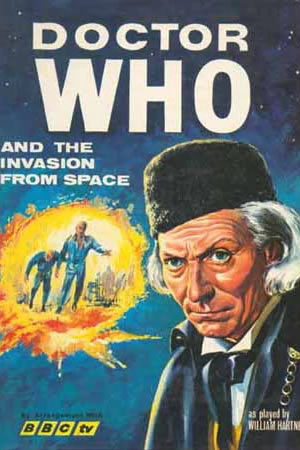
Published:
December 1966
Reviewer Rating:
Avg User Rating:
(3.17)

Incredible. I mean, you have to throw away all your ideas of modern (and even 60s) DW continuity, but the story in here is quite a fantastic ride. The Doctor here feels so small, powerless against an opponent that the book really does a good job of building up as an unstoppable force. The Doctor's intellect, usually his best weapon, is helpless against the composite mind of millions of creatures. That it was all undone by the whims of a child felt like a great thematic resolution to the underlying conflict of enlightened rationality vs. primitive emotion.
The other central theme of the narrative is radical pacifism. I've always been fascinated by stories that deal with this topic, be it Undertale or the New Testament. Survival is such a deep instinct for our species (and presumably most others) that even in an age of rationality such as this we still rarely question our presumed right to kill in self-preservation. The story challenges this notion when the One asks the Doctor "What else would you have us do?" and the answer, unstated, is simply: "Die."
This makes the resolution of the conflict even more interesting, as the little girl doesn't act out of self-preservation, or even a sense of the preservation of her species, which would have tainted the moral message, but just an impulsive act of frustration with no intention to kill (and arguably no intention to do any real harm either).
Now it's not perfect. There's the above-mentioned continuity errors, where even if you discount the idea that the Doctor is a Time Lord from Gallifrey and not a human etc. etc., there's still problems even insofar as 1966 was concerned. He claims his TARDIS is unique and the story implies it was invented by him, even though he is clearly aware in "The Time Meddler," that others exist of his particular make and model. Placing this in the Doctor's personal timeline is troubling, too, as he is shown traveling alone. This couldn't have been before "An Unearthly Child" because the most reasonable view at the time was that he and Susan left their home planet together. And as for the future, even if you put aside his regeneration into the 2nd Doctor (which was just being put together as this book was being written), his characterization is obviously pre-"The Dalek Invasion of Earth," shown when he only subconsciously cares about the humans he has just ditched with the Aalas.
Continuity errors aside, the companions seem a little superfluous. The story could just as easily have worked, perhaps been even better, with only the little girl. Perhaps there were plans for continuing adventures with this quartet. At first I thought the choice of the Great Fire of London was a little odd for their origins, but having them come from the tail end of pre-enlightenment thinking actually works quite well with the aforementioned "Primitive vs. Enlightened" theme.
As a pleasant surprise, J. L. Morrissey seems to have a better grasp on science than anybody who has written for Doctor Who up until this point. Certainly better than Terry Nation. The sheer scale of a galaxy in this story, while still a little underestimated, is given the proper gravitas that the galaxies of "The Daleks' Master Plan" so sorely lacked. The galaxy map stored on light, while a little fanciful, could still probably be pulled off by a modern sci-fi story.
In essence, this story pits the Doctor against a truly impossible foe, ratchets up the tension and builds up a galactic-level threat, plays with multiple complex themes and ideas without becoming too bloated, and has a "classic sci-fi short story twist ending" that feels earned. I wish Morrissey had written more of these.
The other central theme of the narrative is radical pacifism. I've always been fascinated by stories that deal with this topic, be it Undertale or the New Testament. Survival is such a deep instinct for our species (and presumably most others) that even in an age of rationality such as this we still rarely question our presumed right to kill in self-preservation. The story challenges this notion when the One asks the Doctor "What else would you have us do?" and the answer, unstated, is simply: "Die."
This makes the resolution of the conflict even more interesting, as the little girl doesn't act out of self-preservation, or even a sense of the preservation of her species, which would have tainted the moral message, but just an impulsive act of frustration with no intention to kill (and arguably no intention to do any real harm either).
Now it's not perfect. There's the above-mentioned continuity errors, where even if you discount the idea that the Doctor is a Time Lord from Gallifrey and not a human etc. etc., there's still problems even insofar as 1966 was concerned. He claims his TARDIS is unique and the story implies it was invented by him, even though he is clearly aware in "The Time Meddler," that others exist of his particular make and model. Placing this in the Doctor's personal timeline is troubling, too, as he is shown traveling alone. This couldn't have been before "An Unearthly Child" because the most reasonable view at the time was that he and Susan left their home planet together. And as for the future, even if you put aside his regeneration into the 2nd Doctor (which was just being put together as this book was being written), his characterization is obviously pre-"The Dalek Invasion of Earth," shown when he only subconsciously cares about the humans he has just ditched with the Aalas.
Continuity errors aside, the companions seem a little superfluous. The story could just as easily have worked, perhaps been even better, with only the little girl. Perhaps there were plans for continuing adventures with this quartet. At first I thought the choice of the Great Fire of London was a little odd for their origins, but having them come from the tail end of pre-enlightenment thinking actually works quite well with the aforementioned "Primitive vs. Enlightened" theme.
As a pleasant surprise, J. L. Morrissey seems to have a better grasp on science than anybody who has written for Doctor Who up until this point. Certainly better than Terry Nation. The sheer scale of a galaxy in this story, while still a little underestimated, is given the proper gravitas that the galaxies of "The Daleks' Master Plan" so sorely lacked. The galaxy map stored on light, while a little fanciful, could still probably be pulled off by a modern sci-fi story.
In essence, this story pits the Doctor against a truly impossible foe, ratchets up the tension and builds up a galactic-level threat, plays with multiple complex themes and ideas without becoming too bloated, and has a "classic sci-fi short story twist ending" that feels earned. I wish Morrissey had written more of these.